Least Privilege Access Enforcement for Agentic Workflows
Least privilege for agents requires task-scoped roles and permissions that expire automatically.
Least privilege access has a settled definition in security circles: give every identity the minimum permissions needed to do its job, nothing more. That definition assumes a human on the other end, someone with a manager, a job description, and an offboarding date. AI agents break all three assumptions at once. They get created programmatically, they multiply without anyone filing a ticket, and they pick up new tasks, and new access needs, without tripping any of the review workflows built for people. What actually holds up against that: managed identities, task-scoped roles, permissions that expire on their own, and audit trails that answer questions in real time instead of during the postmortem.
Microsoft's Security Blog identifies the execution model itself as the problem. Agents plan, chain actions across systems, and call tools in sequence, and no human signs off on each step along the way. AvePoint made a similar point in a September 2026 piece, warning that companies are shipping agentic capabilities faster than their identity and authorization models can safely keep up. That gap is the subject here.
Start with the vocabulary, since it matters. An AI agent is a non-human identity, or NHI in the increasingly crowded acronym soup of identity security. It acts instead of waiting for permission, and anyone with API access can spin one up in minutes. It also tends to outlive the task that justified giving it permissions in the first place, sitting there quietly with write access to a system nobody remembers connecting it to.
Microsoft's scope-creep pattern is the clearest illustration of how this goes wrong. A team spins up an agent, provisions a "Reader" role because the first use case looks read-only, and then the workflow expands. Write access gets bolted on, a bit at a time, and nobody revisits the overage. No single change looks alarming, but the cumulative state does. An agent holding email, file storage, ticketing, and code-repo access can look low-risk in each integration taken alone, yet the combination lets it correlate data and take actions nobody signed off on as a package deal. Least privilege for agents cannot get retrofitted after deployment. It has to get designed into agent identity, tool binding, and permission scope before anyone hands out autonomy.
The scale of the problem: how fast agentic deployment is outrunning governance
Start with the growth rate, since it sets the tone for everything else. BeyondTrust's Phantom Labs clocked a 466.7% year-over-year increase in AI agents operating inside enterprise environments, a hockey-stick trend line rather than a gradual rise. That is not a trend line. That is a hockey stick.
Only 11% of companies currently run agents in actual production, yet Gartner predicts 40% of enterprise applications will feature task-specific agents by the end of 2026. Gartner's figures sharpen the point further: the average Fortune 500 enterprise ran fewer than 15 agents in 2025. By 2028, that number is projected to top 150,000 per enterprise. The governance surface is detonating. It is detonating.
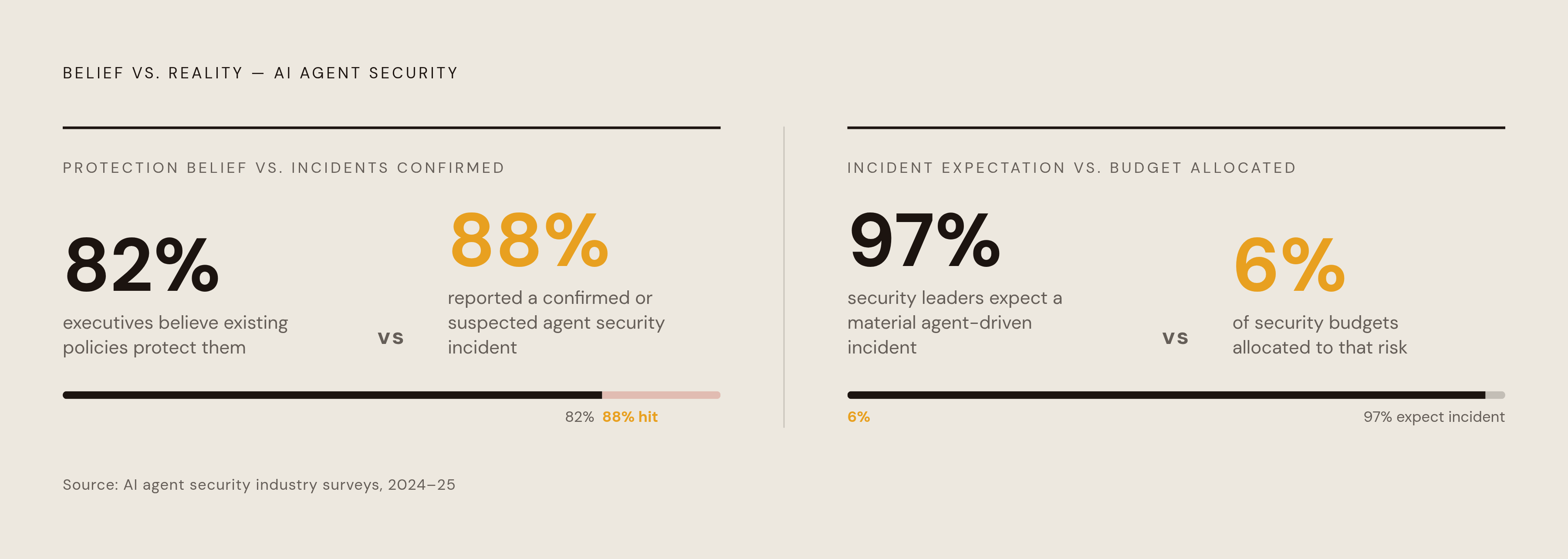
The confidence gap is worse than the growth curve. A Beam AI survey found 82% of executives believe their existing policies already protect them from unauthorized agent actions. In the same period, 88% of organizations reported confirmed or suspected AI agent security incidents in the past year. Those two numbers describe the same population of companies, and the gap between them is a blindfold. It is a blindfold.
The NHI Management Group reports that 97% of security leaders expect a material AI-agent-driven security incident, but only 6% of security budgets get allocated to that risk. Gravitee found only 14.4% of agents go live with full security and IT approval. The rest run on some flavor of best guess. Belief and behavior have never been further apart: most security leaders know what is coming and are budgeting like it is not.
What over-permissioned agents do wrong: the real-world failure modes
Three failure modes recur, each with its own mechanics, and the mistake most teams make is treating them as interchangeable.
The first is quiet scope creep, the incremental write-access pattern already described. No single grant trips an alarm, but the cumulative state does, and by the time anyone notices, the agent's effective permissions bear no resemblance to what got approved on day one.
The second is prompt injection, and calling it a response-quality problem misses what is actually happening. It is an access-control problem. A crafted input can redirect an agent's behavior toward data it was never supposed to touch. With broad access, the blast radius of a successful injection gets set entirely by what the agent is permitted to do, not by what the attacker asked for. Testing in 2026 found multi-turn prompt injection attacks hit a 92% success rate across eight open-weight models: a coin flip that always lands on tails.
The third is quieter still: data exposure that never trips an alarm. Agents do not break in. They work inside the access they were granted, pull data, and surface it in a response, a log line, or a downstream workflow, and none of that looks like a breach in the moment. IBM's research found shadow AI breaches took an average of 247 days to detect, six days longer than standard breaches, and disproportionately hit customer PII, affecting 65% of cases. Six days does not sound like much, until it is six extra days of an agent quietly doing its job with data it should never have touched.
Sources describe an illustrative scenario, not a verified incident, that shows how these failure modes compound: a global bank loses $12 million when a procurement team's shadow agent, wired up to an unvetted language model, gets manipulated through prompt injection and auto-approves a batch of fraudulent invoices. Nobody breaks a firewall in that story. The agent just does what it is permitted to do, for the wrong reasons.
AvePoint's research, citing IBM's Cost of a Data Breach Report, found that among organizations that suffered an AI-related breach, 97% lacked proper AI access controls. That is about as close to a smoking gun as security research gets, and it settles the argument for least privilege: it is the highest-leverage lever available, because it shrinks the blast radius before anything goes wrong.
An ambiguous identity model makes this worse on its own, independent of any single breach. When nobody is sure whether the agent is acting under its own identity, a delegated user's scope, or some blend of both, the logs only get partway there. Even detailed logs can capture what tool got called and under what role, yet still fall short of answering who authorized the action or confirming the action fell inside the agent's intended scope. That is a governance failure hiding inside what looks like a logging feature.
Managed identities: giving every agent a first-class principal before it touches anything
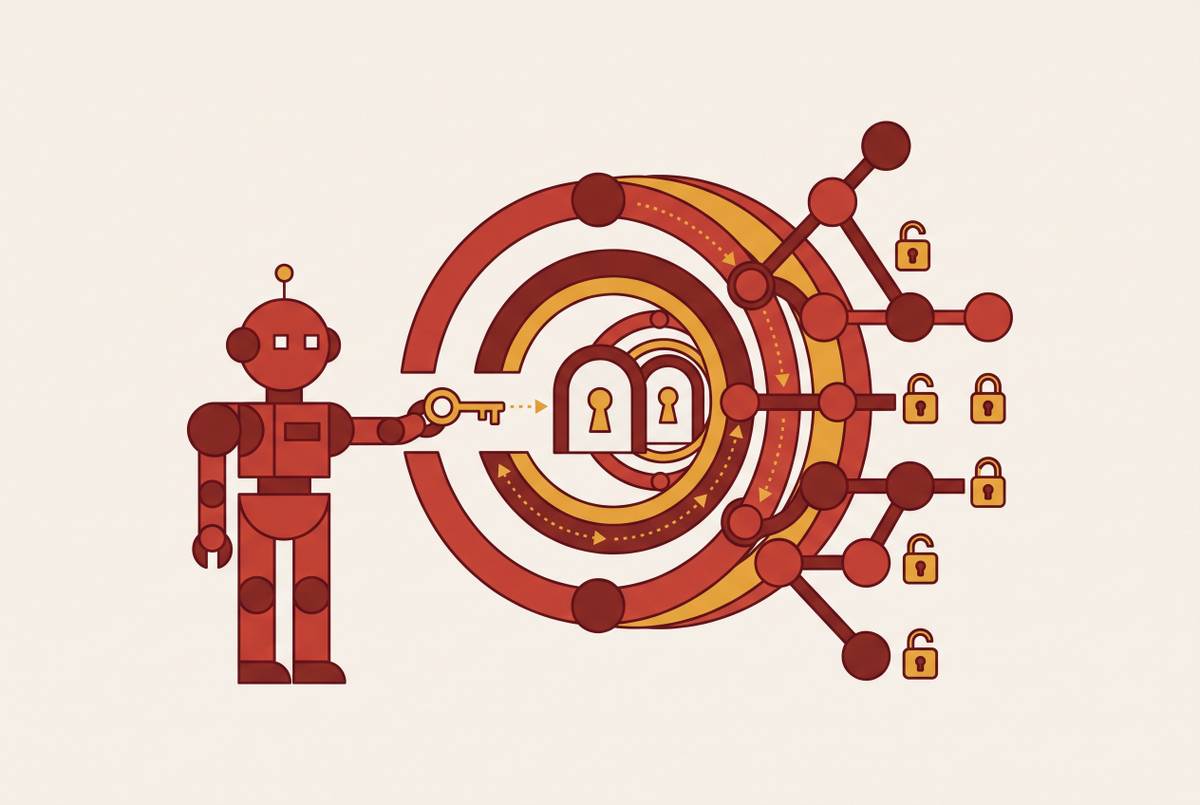
The fix Microsoft's Security Blog proposes starts with a mindset shift: treat every agent as a first-class principal. Not a service account borrowed from some old integration. Not a shared API key passed around a Slack channel. A dedicated identity, a named human owner, a written purpose statement describing what the agent is allowed to do and why, and lifecycle management from the moment it gets created.
In practice, four things travel together: a unique identity that never gets reused or shared, a documented purpose statement attached to the record, a human owner accountable for approvals and incident response, and lifecycle mechanics built in from day one, including onboarding checks, credential rotation, suspension procedures, and a shutdown switch that actually invalidates tokens rather than just disabling a login screen somewhere.
The current state of play is not encouraging. Okta's AI Agents at Work report found only 34% of organizations apply the same security controls to agents that they apply to human employees, and ninety percent have no way to govern what agents in production are actually doing. Most agents today reach enterprise data through static API keys, one-off OAuth grants, and custom integrations built one at a time, application by application. That is agents operating as anonymous traffic: no owner, no policy, no audit trail worth the name.
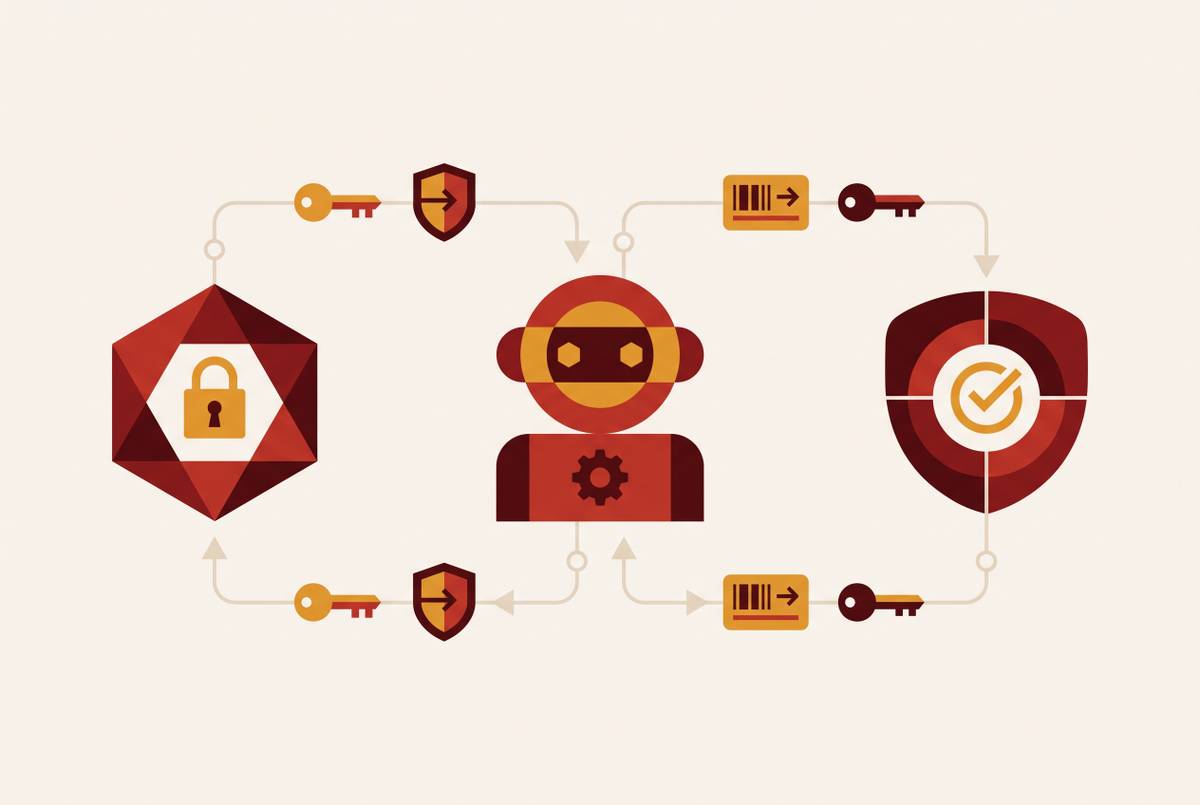
The standards world is catching up, slowly. The IETF's ID-JAG draft (revision 04, dated May 21, 2026) builds on RFC 8693 token exchange to produce an ID-JAG, itself a profile of RFC 7523, for cross-app access scenarios that include agents. The mechanics: an agent takes an ID token from its identity provider, exchanges it for a short-lived assertion scoped to one specific downstream resource, then redeems that assertion at the resource's own authorization server under RFC 7523. The identity provider brokers the exchange, and the resource server keeps independent control over the token it issues. This remains an active OAuth working group Internet-Draft, so treat it as a direction rather than a finished spec.
Okta's Agent SSO, generally available since August 24, 2026, brings the open Cross App Access standard into the Okta identity product, giving those customers a first-class identity model for agents without building one from scratch. Okta for AI Agents, GA since April 30, 2026, extends discovery, lifecycle management, and governance to every agent across the enterprise, including ones not built on Okta's own stack.
Cross App Access expanded to more than 25 early adopters by June 23, 2026. On the requesting side: Anthropic's Claude, Cursor, VS Code, Docker, Zoom. On the resource side: Asana, Atlassian, Canva, Datadog, Figma, Glean, Granola, Linear, Serval, Slack, Supabase, and Zoom, among others. Okta Workforce availability started in August 2026, with Auth0 early access following shortly after.
None of this requires ripping out an existing identity provider. Okta federates with any IdP through OIDC and SAML, so a company can keep Microsoft Entra ID or Ping as the system of record for human employees while layering agent identity governance on top. Microsoft's own answer here is Entra Agent ID, which provides identity, access governance, and policy enforcement for agents enrolled in Entra, primarily ones built on Microsoft's platform or registered through ecosystem partners. And in a sign of where the market's attention is going, Okta closed its acquisition of Permiso on August 26, 2026, a deal reported by TechCrunch at just under $200 million, folding threat detection for agent identities directly into the platform.
Scoped RBAC for agents: designing roles around tasks, not org charts
Role-based access control for humans gets built around org charts, with a manager role, an analyst role, and a finance role. That model does not transfer to agents, because agents do not have job titles. They have tasks, and roles need scoping to the smallest meaningful unit of work an agent actually performs.
Microsoft's Security Blog gives concrete examples of what that looks like: "Read-only knowledge retrieval," "Summarize labeled documents," "Create a draft ticket." Each of those maps to a discrete workflow. Compare that to the instinct most teams follow under deadline pressure, which is to bundle unrelated permissions together to cut down on operational friction. That instinct is exactly the mechanism that produces agents holding a pile of effective permissions nobody signed off on as a set, and it is the wrong instinct every single time.
Separation of duties still applies, and arguably matters more for agents than for humans. If a workflow involves both gathering evidence and taking remediation action, those two functions need different roles, or different tools. Read and write should not live in the same grant. High-impact actions, deletion, export, anything that touches privilege itself, belong behind a step-up approval, not behind whatever role happened to get assigned six months ago.
AvePoint's AgentPulse product applies RBAC specifically to AI agents, so each one gets just enough access instead of whatever got inherited from a template or left over as a default. It is one example of platform-level enforcement of this principle in a real product.
A related structural risk applies to agents built on MCP servers: they can connect straight to databases, APIs, and internal services, and an overprivileged connector on one of those integrations can expose far more data than a typical human user session ever would. The connector itself becomes the widest door in the building.
Security guidance consistently recommends scoping access at multiple layers: the identity layer, the tool-binding layer, and the data layer. No single boundary suffices on its own, since any one of them can fail or get misconfigured, and redundancy is the only thing that catches the failure before it becomes an incident. A 2026 survey of senior technology leaders found 54% of organizations have already suffered a security incident tied to an agent acting unexpectedly, an incident report waiting to be filed rather than a hypothetical risk. That is not a hypothetical risk anymore. That is an incident report waiting to be filed.
This is where the MCP gateway earns its keep. An enterprise MCP gateway sits between agents and the MCP servers they call, enforcing tool-level access control through allow-lists. It is the one place task-scoped RBAC gets applied uniformly across every tool call, instead of getting configured piecemeal, integration by integration, by whichever engineer happened to build it.
Just-in-time permissions and zero standing privilege in agentic workflows
Standing access is the default state for almost every deployed agent today, and it is the root condition that makes every other failure mode on this list worse. An agent that keeps its write access between tasks is a permanently open door, whether or not anyone is walking through it at any given moment.
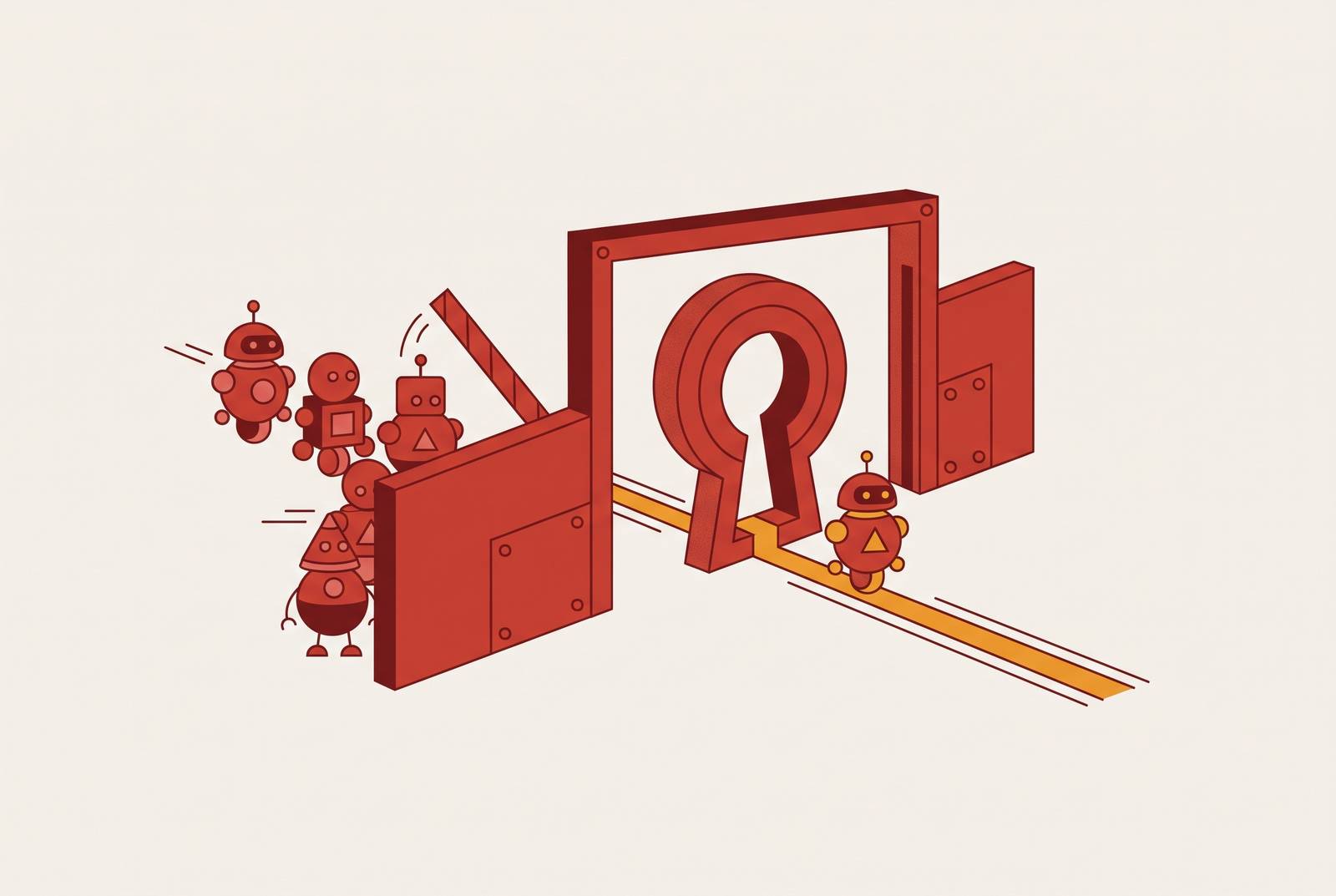
MiniOrange describes just-in-time access as flipping that arrangement: permissions get granted only when a task requires them and revoked automatically once the task finishes. That shrinks the window of exposure down to the duration of the work itself, and it is the operating principle behind zero standing privilege in agentic environments.
Microsoft's Security Blog draws a distinction that is easy to get backwards: the time-limited part should apply to entitlements, meaning role activations, tokens, or approvals, not to the agent's identity itself. The identity stays stable, because lifecycle management, audit trails, and ownership records depend on that stability. The privilege attached to that identity gets elevated narrowly, for the duration of one workflow, then drops back down.
A task-based model defines access around the task rather than assigning it permanently to the agent. A research agent reading through documents needs read access, full stop, nothing beyond it. As the task changes, the permission set changes with it, rather than sitting fixed at whatever level someone configured at setup.
The token exchange mechanism described earlier connects directly to this. The short-lived assertion produced through RFC 8693 token exchange supports just-in-time access patterns: it is tied to one downstream resource and carries an expiration, and the next task requires a fresh exchange rather than reusing the old one. This is the exact point where standards work and zero standing privilege meet in practice, not in theory.
miniOrange states that none of this works without a policy layer making the actual decisions, one that weighs identity, context, task type, and risk level together. That is what makes access adaptive instead of static, and it matters because agents switch tasks constantly and a fixed permission set cannot keep pace with that.
There are limits here too. Teramind's Shadow AI Report found up to 75% of employees admit to sharing sensitive data with AI tools that were never approved. Just-in-time access and task scoping do not fix that problem, because an agent that was never sanctioned is not inside the policy framework. What they do is contain the blast radius when an agent that did get approved gets compromised or manipulated: a narrower promise, but a real one. The operational shift that matters here is moving from "configure once and forget" to "grant, execute, revoke," every single time, for every single task.
Continuous audit and real-time threat detection across the agent lifecycle
Microsoft's Security Blog notes that when the identity model is a mess, logs capture what tool got called but cannot answer who authorized it, under what role, or whether the action stayed inside its intended scope. Continuous audit exists to make those three questions answerable while the agent is still running, not two hundred days later during an incident review.
Microsoft frames the bar simply: a security team should be able to answer "what happened, under what authority, and what changed" quickly, on demand. That is only possible if the identity model, the role assignments, and the tool-binding records are coherent before the agent ever executes a single action. Bolt that structure on after the fact, and the audit trail will have gaps exactly where the incident happened.
Real-time detection breaks into a few separate categories, and they catch different things.
Zscaler and miniOrange describe prompt injection detection as running on runtime content filters trained to catch adversarial prompt patterns before they reach the model, paired with strict input validation and a hard architectural separation between system instructions and user input. If the model cannot tell an instruction from its operator apart from text pasted in by a user, no filter downstream will save it.
PII and secrets leakage is a live problem at scale. Research found 34.8% of enterprise ChatGPT inputs contained sensitive data, including customer records, payment card numbers, and health information. Harmonic Security's research found six AI applications accounted for 92.6% of all sensitive data exposure, with source code making up 30% of that exposure, legal discourse 22.3%, and M&A data 12.6%. That exposure sits concentrated in a handful of tools everyone is already using, not spread across some long tail of scattered leaks.
Behavioral anomaly detection, a monitoring approach built around learning normal patterns rather than fixed rules, catches what a rule-based filter would miss: an agent pulling large volumes of database rows through natural language queries at three in the morning, when nothing about the request looks malicious on its face but the volume and timing do not match anything normal. That is the signal that separates ordinary agent behavior from an agent that has been quietly hijacked.
Shadow agent detection needs three signals fused together to work: browser-level visibility into prompts as they get typed, OAuth grant scanning across every connected SaaS app, and audit-log filtering by domain. Next-generation CASB systems are starting to build in controls that block connections to AI endpoints that were never approved in the first place, the closest thing to a perimeter this problem has left.
Sources
- AI Agent Least Privilege: A Practical Guide (2026) | AvePoint
- How to Enforce Least Privilege for AI Agents in Enterprise Environments
- How to Establish Least-Privilege for AI Agents and Assistants
- Least privilege for AI agents: Identity, access, and tool binding | Microsoft Security Blog
- Agentic AI security in 2026: why current controls fall short
- AI Agent Identity Governance and Least Privilege | BeyondTrust
- gravitee.io
- beam.ai